
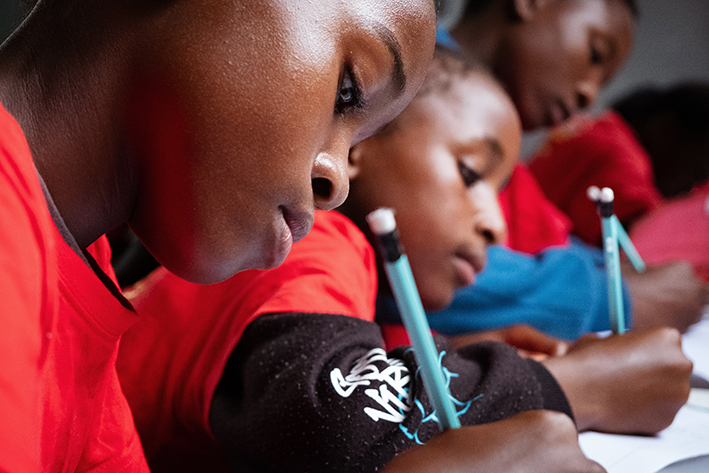
An interview with Siyethemba Dlamini, Programme Lead: PowerGirls
“I speak not just from a place of data and impact,” says Siyethemba Dlamini, “but from a heart that beats for every single girl in this programme.”
By the end of 2025, PowerGirls had grown into far more than a structured empowerment programme. It had become a safe and affirming space where girls who had long been unseen could step forward, find their voices, and begin to imagine futures beyond the limits imposed by circumstance.
Why PowerGirls is needed
PowerGirls was created in response to a deeply rooted gap. Across many communities, girls grow up navigating low self-confidence, limited access to mentorship, systemic exclusion and rigid gender expectations that quietly narrow their sense of possibility.
“For too long, many of our girls were living in the shadows of their own potential,” Dlamini explains. “We saw confidence shrinking, leadership feeling out of reach, and very few spaces where girls were truly seen and heard.”
PowerGirls was designed to disrupt those patterns. The programme does not position girls as passive beneficiaries, but as active participants in their own growth; capable, creative and worthy of investment. Its guiding motto, ‘We are the sun and stars, aiming high, uplifting ourselves and others’, reflects a commitment to ensuring that a girl’s background never determines her horizon.
“This programme exists to break cycles of self-doubt and limited opportunity,” she says. “It is both a sanctuary for growth and a launchpad for dreams.”
Impact by the end of 2025
By the close of 2025, both the data and lived experience told a compelling story of transformation.
“We saw a clear increase in self-efficacy,” Dlamini. “Girls who entered the programme hesitant to speak are now leading projects, mentoring peers and showing up with confidence in their schools and communities.”
Academic engagement and skills development improved alongside personal growth. Technical and soft-skills training translated into stronger school performance, improved digital literacy and emerging leadership capabilities. These girls were no longer just participating, they were becoming future-ready.
Equally powerful was the growth of sisterhood. Peer-to-peer mentorship expanded significantly, with older PowerGirls actively supporting and guiding younger participants. “We didn’t just grow in numbers,” she reflects. “We built a movement rooted in connection and care.”
A key driver of this impact has been the facilitators themselves. Many women entered the programme with limited formal education but a deep passion for mentorship.
“One of the most beautiful transformations I’ve witnessed isn’t only in the girls,” says Dlamini, “but in the MAMAS who guide them. With training, trust and support, they have grown into confident leaders and that growth flows directly to the girls.”
Power in action: stories of resilience
Some of the most profound moments of 2025 emerged when PowerGirls became a space for collective healing.
At the RCP Rosettenville site, where participants are refugees and asylum seekers, a session in April responded to a Pretoria High Court ruling that led to the eviction and detention of displaced families. For the girls, the news mirrored their own lived vulnerabilities.
The group transformed the session into an anonymous letter-writing initiative, sending messages of solidarity to those affected. The exercise allowed girls to process fear and uncertainty while embodying the programme’s core value of humanity, choosing compassion even amid personal insecurity.
Another story is that of Emile Simani, a PowerGirls graduate whose learning barriers led to bullying and eventual school dropout. Recognising her creativity, the programme redirected her path toward vocational training in sewing and knitting. By 2025, Emile had emerged as a skilled artisan, with her confidence restored and her sense of purpose renewed.
A third story comes from SwaVana, where an undocumented rural girl excelled in a 12-month sewing programme. Despite being unable to receive formal certification, she was awarded Best Candidate for her discipline and creativity. Today, she is a designer whose work embodies resilience. “I’m the product of PowerGirls,” she says. “It taught me persistence and perseverance.”
Changing the narrative
“When I look at these results,” Dlamini concludes, “I don’t see charts and percentages. I see faces. I see the future.”
PowerGirls is not just changing individual lives. It is reshaping what is possible, for girls, for women, and for the generations that follow.